
Saints for January 1
General Roman Calendar and U.S. Additions
Solemnity of Mary, Mother of God—The Octave Day of the Nativity of the Lord
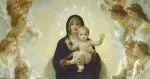
On the eighth day of Christmas, the Church honors Mary as the Mother of God. As she holds the Child born in Bethlehem, she adores her Son, the eternal Son of the Father. Read full reflection >>>
Roman Martyrology for January 1
The daily list is based on the Italian bishops’ edition of the Roman Martyrology. Later entries are identified below with their sources. Download the complete Italian edition (large PDF). Further reading: January 1 at CatholicSaints.info.
The Blessed Virgin Mary, Mother of God
On the eighth day of Christmas the Church honors Mary, Mother of God, from whom the eternal Son received His human nature. Read full reflection >>>
Deposition of Saint Basil, bishop of Caesarea in Cappadocia
The Martyrology marks the death of Basil, bishop of Caesarea. The Church celebrates his memorial with Saint Gregory Nazianzen on January 2. Read full reflection >>>
Saint Justin of Chieti, bishop
Justin is venerated at Chieti in the Abruzzo region of Italy, where the cathedral bears his name. The Martyrology also associates his memory with Campania and recalls the zeal with which he defended Christians. His early cult is more securely attested than the dates of his episcopate or the details of his upbringing.
Nominis, French Bishops’ Conference (French) · Catholic Church in Norway (Norwegian) · S. Giustino – Chieti – Arcidiocesi di Chieti-Vasto · Roman Martyrology (Italian), January 1, no. 3 · Wikipedia — Justin of Chieti (English)
Saint Almachius, martyr at Rome
The Roman Martyrology remembers Almachius for opposing gladiatorial combat in Rome and records that he was killed by gladiators. Theodoret of Cyrrhus tells a related story about a monk he calls Telemachus. Both accounts preserve the memory of a Christian who challenged the taking of human life for public entertainment, although they differ about the circumstances of his death.
Nominis, French Bishops’ Conference (French) · Catholic Church in Norway (Norwegian) · Roman Martyrology (Italian), January 1, no. 4 · Wikipedia — Saint Telemachus (English)
Saint Oyend, abbot of Condat
Eugendus entered the monastery of Condat as a child and, according to tradition, never left it, growing into a learned and austere monk deeply formed by Scripture and the spiritual heritage of the Jura monasteries. As abbot, he strengthened the community and helped it flourish as a refuge amid social upheaval, and devotion at his tomb became influential enough that the surrounding settlement took his name for centuries. His life is associated with the early monastic culture of Gaul, where prayer, stability, and pastoral charity shaped whole regions through monasteries that became spiritual centers.
Diocese of Saint-Claude (French) · Nominis, French Bishops’ Conference (French) · Catholic Church in Norway (Norwegian) · Roman Martyrology (Italian), January 1, no. 5 · Wikipedia — Eugendus (English)
Saint Fulgentius, bishop of Ruspe
Born in North Africa to a prominent family, Fulgentius was trained in languages and public administration and served as a procurator before turning decisively to monastic life. He eventually became bishop of Ruspe and endured severe hardships under Vandal rulers who promoted Arianism, including exile to Sardinia; yet he continued to instruct and strengthen the faithful through preaching and theological writing. He is remembered as a pastor-theologian whose episcopal courage was inseparable from a monk’s discipline and a confessor’s perseverance.
Archdiocese of Tunis · Nominis, French Bishops’ Conference (French) · Catholic Church in Norway (Norwegian) · Roman Martyrology (Italian), January 1, no. 6 · Wikipedia — Fulgentius of Ruspe (English)
Saint Clair, abbot of the monastery of Saint-Marcel at Vienne
Clair was abbot of the monastery of Saint-Marcel at Vienne in what is now France. His monks remembered him for the example he gave them in living their common vocation to prayer and religious life.
Nominis, French Bishops’ Conference (French) · Catholic Church in Norway (Norwegian) · Roman Martyrology (Italian), January 1, no. 7 · Wikipedia — Clair du Dauphiné (English)
Saint Frobert, founder and first abbot of Moûtiers-la-Celle
Frobert is remembered as founder and first abbot of Montier-la-Celle (near Troyes), established on land granted by King Clovis II, with the monastic church dedicated to Saint Peter. He belongs to the seventh-century world where monasteries were both spiritual schools and anchors of Christian life in Frankish society, shaping prayer, learning, and service. A later hagiography helped transmit his memory, and his veneration endured in both Catholic and Orthodox calendars.
Nominis, French Bishops’ Conference (French) · Catholic Church in Norway (Norwegian) · Roman Martyrology (Italian), January 1, no. 8 · Wikipedia — Frobert of Troyes (English)
Saint Guillaume, abbot of Saint-Bénigne at Dijon
William was a monk and reforming abbot active across Burgundy and Normandy, closely linked to Cluniac ideals of disciplined liturgy, education, and monastic renewal. He became abbot of Saint-Bénigne at Dijon, where he helped make the abbey a center of reform and influence, with traditions crediting him with oversight of a wide network of dependent monasteries. In his later years he governed broadly with administrative strength and spiritual purpose, embodying the medieval abbatial role as both father of monks and architect of ecclesial renewal.
Nominis, French Bishops’ Conference (French) · Catholic Church in Norway (Norwegian) · Roman Martyrology (Italian), January 1, no. 9 · Wikipedia — William of Volpiano (English)
Saint Odilon, abbot of Cluny
As the fifth abbot of Cluny, Odilo led for decades during a period when Cluny became one of the most important monastic forces in Western Europe, promoting reform and stability across many houses. He worked for peace through initiatives such as the “Truce of God” and became especially associated with establishing the commemoration of All the Faithful Departed (All Souls’ Day) within Cluniac monasteries, a practice that spread widely. Tradition depicts him as personally austere yet merciful toward others, combining strong governance with pastoral tenderness in times of conflict and famine.
Nominis (French bishops) · CatholicSaints.info · Santi e Beati (Italian) · Roman Martyrology (Italian), January 1, no. 10 · Wikipedia — Odilo of Cluny (English)
Saint Zdislava, Wife and Mother
A married laywoman and mother in thirteenth-century Bohemia, Zdislava was known for generous care of the poor and sick, with traditions of charity so strong that they shaped her reputation already in the late Middle Ages. She was associated with the Dominican spiritual family as a tertiary and is remembered for sanctifying family life through prayer, works of mercy, and perseverance amid the responsibilities of marriage and motherhood. Beatified in 1907 and canonized in 1995, she remains a prominent saint of the Czech lands and a patron invoked in difficult family situations.
Dicastery for the Causes of Saints · Nominis, French Bishops’ Conference (French) · CatholicSaints.info · Svatá Zdislava, manželka, matka, ochránkyně rodin – Církev.cz | Zprávy · Roman Martyrology (Italian), January 1, no. 11 · Wikipedia — Zdislava Berka (English)
Blessed Ugolino of Gualdo Cattaneo, Hermit
Ugolino lived as a hermit at Gualdo Cattaneo in Umbria. The town kept his memory alive, and the Church honors him among the blessed.
Catholic Church in Norway (Norwegian) · CatholicSaints.info · Roman Martyrology (Italian), January 1, no. 12 · Wikipedia — Ugolino da Gualdo Cattaneo (English)
Saint Giuseppe Maria Tomasi di Lampedusa, Theatine priest and cardinal
Born into Sicilian nobility, Tomasi renounced inherited privilege to become a Theatine priest and eventually a cardinal, living with striking simplicity and scholarly discipline. He devoted his life to the renewal of divine worship through painstaking study and publication of ancient liturgical sources, and he paired this learning with pastoral charity, including catechesis of children and a personal devotion marked by humility. Beatified in 1803 and canonized in 1986, he is often remembered as a patron-figure for serious liturgical scholarship ordered toward deeper prayer and faithful worship. Giuseppe Maria Tomasi di Lampedusa was ordained to the priesthood in 1673.
Dicastery for the Causes of Saints · Catholic Church in Norway (Norwegian) · Nominis, French Bishops’ Conference (French) · San Giuseppe Maria Tomasi – Arcidiocesi di Agrigento · Roman Martyrology (Italian), January 1, no. 13 · Wikipedia — Giuseppe Maria Tomasi (English)
Blessed Jean and René Lego, priests and martyrs
Jean-Baptiste and René Lego were brothers and priests in western France. They continued to serve the faithful during the French Revolution and were condemned for their fidelity to the Church. They died by guillotine on January 1, 1794, and were beatified with their companions in 1984.
Roman Martyrology (French), January 1, no. 14 · Santi e Beati (Italian) · Wikipedia — René Lego (French) · Wikipedia — Jean-Baptiste Lego (French)
Saint Vincenzo Maria Strambi, Passionist, bishop of Macerata and Tolentino
A Passionist priest renowned for preaching and leadership, Strambi was appointed bishop of Macerata-Tolentino in the early nineteenth century and became known for pastoral reforms and care for the poor. During the Napoleonic era he refused to swear an oath of loyalty demanded of clergy, a stance that led to exile, demonstrating the conscience-formed loyalty that marked many confessors of that period. Canonized in 1950, he is remembered as a holy bishop whose governance blended firmness in faith with a shepherd’s practical solicitude for his people. Vincenzo Maria Strambi was ordained to the priesthood in 1767.
Dicastery for the Causes of Saints · Nominis, French Bishops’ Conference (French) · CatholicSaints.info · Roman Martyrology (Italian), January 1, no. 15 · Wikipedia — Vincent Strambi (English)
Blessed Valentinus Paquay, Franciscan priest
Born in Belgium and baptized with the name Louis, Paquay became a Franciscan priest known for humility, prayer, preaching, and especially for tireless ministry in the Sacrament of Reconciliation and spiritual guidance. Vatican sources emphasize his pastoral charity and the confidence penitents placed in him, drawn by a reputation for holiness and patient mercy. Valentinus Paquay was ordained to the priesthood in 1854.
Nominis, French Bishops’ Conference (French) · Catholic Church in Norway (Norwegian) · Roman Martyrology (Italian), January 1, no. 16 · Wikipedia — Johannes Ludovicus Paquay (English)
Saint Zygmunt Gorazdowski, priest, founder of the Sisters of Saint Joseph
Born in 1845 (in the region historically connected with present-day Ukraine/Poland), he began in law studies before entering the Latin seminary in Lviv and being ordained in 1871, carrying lifelong physical frailty with determined charity. He became a pioneer of organized works for the poor and vulnerable, founding a religious congregation (the Sisters of Saint Joseph) and advancing practical initiatives for human dignity and the defense of life. His sanctity is remembered in a distinctly pastoral key: energetic service rooted in prayer and sustained by a priestly heart attentive to concrete needs. In 1884 he established a community of Sisters of Saint Joseph to continue works of mercy that he had already begun in Lviv.
Holy See · Nominis, French Bishops’ Conference (French) · Catholic Church in Norway (Norwegian) · Roman Martyrology (Italian), January 1, no. 17 · Wikipedia — Zygmunt Gorazdowski (English)
Blessed Marian Konopiński, martyr at Dachau
A Polish diocesan priest of the Archdiocese of Poznań, Marian Konopiński died in the concentration camp of Dachau on January 1, 1943, after being subjected to pseudo-medical experiments by the camp authorities. He is venerated among the 108 Martyrs of World War II. While concise sources emphasize the basic facts of his priesthood, imprisonment, and death, his witness is situated within the broader story of clergy persecuted under Nazi oppression. His commemoration holds up fidelity under suffering, where priestly identity was lived to the end as a gift offered to Christ. Marian Konopiński was ordained to the priesthood in 1932.
Nominis, French Bishops’ Conference (French) · Catholic Church in Norway (Norwegian) · Roman Martyrology (Italian), January 1, no. 18 · Wikipedia — Конопиньский, Мариан (Russian)
Blessed Andrés Gómez Sáez, Salesian priest and martyr
Andrés Gómez Sáez belonged to the Salesians of Don Bosco. During the Spanish Civil War he was taken prisoner at Santander on New Year’s Day 1937 and killed for his faith. He was beatified with other Salesian martyrs in 2007.
Listed for January 1 by Hagiography Circle. Dicastery for the Causes of Saints (Italian) · CatholicSaints.info · Santi e Beati (Italian)
Blessed Lojze Grozde, student and martyr
Lojze Grozde was a Slovenian student and member of Catholic Action. On a journey during the Second World War, communist partisans detained him near Mirna. He was tortured and killed on January 1, 1943, at nineteen.
Listed for January 1 by Hagiography Circle. Dicastery for the Causes of Saints (Italian) · Nominis, French Bishops’ Conference (French) · CatholicSaints.info · Wikipedia — Lojze Grozde (English)