
Saints for January 27
Danh sách các thánh theo từng ngày dựa trên ấn bản Sách Tử đạo Rôma của Hội đồng Giám mục Ý. Tải trọn bộ ấn bản tiếng Ý (tệp PDF dung lượng lớn).
January 27—General Roman Calendar and other local calendars
Saint Angela Merici, Virgin—Optional Memorial: General Roman Calendar; Memorial in some local calendars
Memorial in Slovenia on January 22
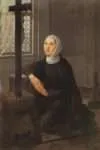
In Brescia, Angela gathered women into the Company of Saint Ursula. They consecrated themselves to Christ while living in their own homes, opening a new path for women to serve the Church. Read full reflection >>>
Roman Martyrology (Italian), January 27, no. 1
Photograph by Benoit Lhoest · CC BY-SA 3.0. Shown as an MCL thumbnail.

Saint Devota of Corsica, Virgin and Martyr—Solemnity: Monaco
Birth: c. 283, Corsica (tradition)
Death: c. 303–304, Corsica (martyred); relics brought to Monaco
Patronage: Principality of Monaco; Corsica.

Accounts that date at least eight centuries after Devota’s death provide what we know of this saint. As a young virgin, Devota (Dévote) dedicated herself to the service of God. She was part of the household of Senator Eutychius, who refused to give her up when the local prefect ordered that she be turned over and made to sacrifice to the Roman gods. For his refusal, Eutychius was poisoned. Devota was imprisoned, tortured, and died on the rack, one of many Christians who lost their lives in the persecution under Emperor Diocletian.
According to the same tradition, before Devota’s body could be burned by the Romans, Christians recovered her remains, which are buried in a chapel in Monaco. There, she is revered for helping the principality to preserve its independence when threatened by invaders and for an end to a plague in 1631. A church is dedicated to her on the island of Corsica.
Other Resources: Diocese of Monaco, Nominis (French Bishops), Wikipedia
Blessed George Matulaitis‑Matulewicz, Bishop—Memorial: Lithuania and Russia
Birth: April 13, 1871, Lugine, Lithuania
Death: January 27, 1927, Kaunas, Lithuania
Patronage: None.

George Matulaitis (Jerzy Matulewicz in Polish) was born to poor farmers in Lithuania and orphaned at age ten. Weakness in his right arm and leg kept him from farm work and from schoolwork for a time. Recognizing his keen intellect, his uncle, a priest, sponsored George’s education. George studied in Saint Petersburg, was ordained in 1898, and completed his doctoral studies in Switzerland.
The Czarist regime had repressed religious orders, but George felt they were key to renewing and reviving the faith in Russia. He secretly revived the Marian Fathers, eventually resigning from teaching to serve as the order’s superior general. He also founded the Sisters of the Immaculate Conception and the Handmaids of Jesus in the Eucharist. His orders spread to Switzerland and the United States, while George was made bishop of Vilnius in 1918. During the next seven years, Lithuania changed hands eight times among Lithuanian, Polish, and Russian forces. Exhausted by the conflict, George resigned as bishop in 1925. He traveled to the United States to take part in the Eucharistic Congress in 1926. While there, he visited ninety-two Lithuanian parishes. Shortly after returning to Lithuania, he died of a ruptured appendix.
Other Resources: Marian Fathers, Nominis (French Bishops), Wikipedia
Saint Augustine Zhao Rong, Priest and Martyr—Optional Memorial: China
Birth: 1746, China
Death: 1815, China (martyred)
Patronage: China, as one of the 120 Martyrs of China
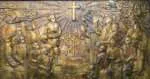
Born in southwestern China, Zhao Rong became a member of the Chinese Imperial Guard. One of his duties was to escort the imprisoned French priest (later a bishop and martyr) John Gabriel-Taurin Dufresse. Impressed with the priest’s kindness and peaceful demeanor, Zhao asked for Baptism, taking the name Augustine. Five years later, he was ordained a priest.
Known for attracting converts, Zhao Rong was arrested in a later persecution. For his refusal to renounce the faith, he was tortured until his death from the brutal treatment. He is one of the 120 Chinese Martyrs canonized in 2000; an optional memorial honors the group on July 9.
Other Resources: Vatican, Nominis (French Bishops), Wikipedia
Photograph by Fayhoo · CC BY-SA 3.0. Shown as an MCL thumbnail.

Saint John Maria (Jean Marie) Muzeyi, Martyr—Memorial: Rwanda
Birth: 1850, near Minziro, Uganda
Death: January 1887, Mengo, Uganda
Patronage: None
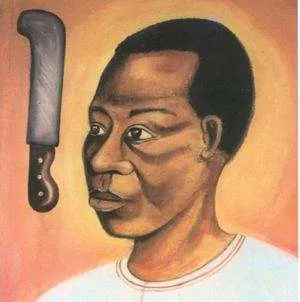
Born Musoke Muzeyi to a member of the royal court, the future martyr grew up serving at court like his father. When Musoke became a Muslim and took the name Jamari, one of the “White Fathers,” a Missionary of Africa, gave him the similar-sounding name Jean Marie. In the early 1880s, Jean Marie got to know some Christians and worked for a Christian majordomo at court. He was baptized on November 1, 1885 and vowed to remain celibate to serve Jesus. Jean Marie performed many corporal works of mercy and served as a lay catechist. Soon, King Mwanga II began a violent persecution of Christians, especially those at court. Refusing to renounce or hide his faith, Jean Marie was beheaded on January 27, 1887. His body was thrown into a swamp. He is regarded as the last of the Uganda Martyrs, who are honored as a group on June 3.
Other Resources: Archdiocese of Kampala, Pontifical Mission Societies
MCL reflection on the Ugandan martyrs
Portrait from the Archdiocese of Kampala’s gallery of the Uganda Martyrs.
Roman Martyrology for January 27
Saint Angela Merici, virgin, founder of the Sisters of Saint Ursula
Angela founded the Company of Saint Ursula (Ursulines), a new form of consecrated life for women living in the world to educate girls and support families. Her intuition—that women’s education is essential to Christian society—bore great fruit as Ursulines spread across Europe and beyond. Read full reflection >>>
Roman Martyrology (Italian), January 27, no. 1 · Biographical source
Saint Giuliano, martyr at Le Mans
Saint Julian is commemorated at Sora in Latium as a martyr said to have suffered during the reign associated by tradition with Emperor Antoninus. His remembrance preserves the name of one who shed his blood rather than deny Christ. Though details are limited, his cult reflects the Church’s ancient reverence for local martyrs.
Roman Martyrology (Italian), January 27, no. 2
Saint Julien, first bishop of Le Mans
Saint Julian is held to be the first bishop of Le Mans and is remembered as a foundational pastor who established Christian life in that region. Though historical particulars are scarce, his remembrance honors the apostolic labor of those who planted the Church in Gaul. He remains inspiring as a sign that the Church’s growth often begins with hidden perseverance and faithful shepherding.
Roman Martyrology (Italian), January 27, no. 3
Saint Dévote, virgin and martyr
Devota, a young Christian of Corsica, was martyred under Diocletian. According to tradition, her body was placed in a boat that miraculously reached Monaco, where she became principal patroness. Read the biography above >>>
Roman Martyrology (Italian), January 27, no. 4
Saint Marius, Abbot
Marius served as abbot of a monastery in the territory of Sisteron in southern Gaul. The local Church preserved his memory among the early monks of the region.
Roman Martyrology (Italian), January 27, no. 5
Saint Vitalian, pope
Saint Vitalian served as Bishop of Rome and is remembered for his concern for the salvation of the English people. His pontificate belongs to an era of ongoing missionary expansion and ecclesial consolidation, when Rome strengthened bonds of communion across growing Christian lands. He remains inspiring as a pope attentive to the needs of distant churches, showing that the unity of the Church is not merely administrative but pastoral.
Roman Martyrology (Italian), January 27, no. 6
Saint Thierry, bishop of Orléans
Saint Theoderic, bishop of Orléans, died while on pilgrimage to the tombs of the Apostles in Rome. His pilgrimage reflects the deep early medieval devotion to the apostolic foundations of the Church and the desire to renew faith through contact with the places sanctified by the martyrs. His life remains inspiring because it shows episcopal humility and reverence.
Roman Martyrology (Italian), January 27, no. 7
Saint Gilduin, deacon of Dol
Saint Gildwin was a deacon of Dol in Brittany who, though elected bishop while still young, humbly refused so great an honor before Pope Gregory VII, judging himself unworthy. Returning from Rome, he fell ill near Chartres and died there, completing a quiet pilgrimage marked by humility. His remembrance is inspiring because it honors humility over ambition.
Roman Martyrology (Italian), January 27, no. 8
Blessed Jean, canon regular, bishop
Blessed John was a regular canon who became bishop of the Morini at Thérouanne. He labored for decades against simony and abuses, seeking reform and strengthening ecclesial life through foundations and disciplined pastoral governance. His life remains inspiring as a model of reform grounded in perseverance.
Roman Martyrology (Italian), January 27, no. 9
Blessed Manfredo Settale, priest and hermit
Blessed Manfred Settala lived near Como as a priest and hermit, embracing solitude, prayer, and penitential discipline. His vocation reflects the perennial call to seek God in silence and simplicity, offering hidden intercession for the Church. Though details are limited, his remembrance remains inspiring because it honors the spiritual fruit of the solitary life.
Roman Martyrology (Italian), January 27, no. 10
Blessed Rosalie du Verdier de la Sorinière, Religious and Martyr
Rosalie was a Benedictine nun of Our Lady of Calvary at Angers. During the French Revolution she remained faithful to her religious profession and was put to death at Angers in 1794.
Roman Martyrology (Italian), January 27, no. 11
Saint Ioannes Maria Muzeyi, martyr of Uganda
Saint John Mary Muzei, called “the Elder,” served in the court of the king in Uganda and became Christian. When persecution arose, he refused to flee and instead freely declared his faith before the chief minister of King Mwanga, choosing Christ over safety. Read the biography above >>>
Roman Martyrology (Italian), January 27, no. 12 · MCL reflection on the Ugandan martyrs
Saint Enrique de Ossó i Cervelló, priest, founder of the Congregation of Saint Teresa of Jesus
Saint Henry de Osso labored zealously for the education and formation of girls, founding the Society of Saint Teresa to promote Christian teaching and spiritual growth. He combined pastoral charity with a keen sense of the Church’s needs, especially in strengthening family and youth through sound formation. After being separated from his congregation, he spent his remaining years in a Franciscan convent, embracing humility and prayer.
Roman Martyrology (Italian), January 27, no. 13 · Holy See
Blessed Jurgis Matulaitis-Matulevicius, bishop of Vilnius and later apostolic visitor to Lithuania
George Matulaitis secretly refounded the Marian Fathers during Tsarist oppression, adapting them for new apostolic work. As bishop of Vilnius and later apostolic visitor to Lithuania, he promoted social justice, catechesis, and reconciliation among ethnic groups. Read the biography above >>>
Roman Martyrology (Italian), January 27, no. 14 · Vatican News