
Saints for January 8
ఈ రోజువారీ జాబితా ఇటలీ బిషప్పులు ప్రచురించిన రోమన్ మార్టిరాలజీ సంచికను అనుసరిస్తుంది. పూర్తి ఇటాలియన్ సంచికను డౌన్లోడ్ చేసుకోండి (పెద్ద PDF ఫైలు).
January 8—General Roman Calendar and other local calendars
Saint Raymond of Penyafort, Priest—Optional Memorial: Canada
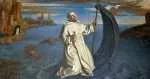
Raymond of Penyafort put his training in Church law at the service of confessors. Canada keeps his optional memorial on January 8, the day after his observance on the General Roman Calendar. Read full reflection >>>
Saint Severinus of Noricum, Monk—Optional Memorial: Austria, Germany, Switzerland, German-speaking dioceses
Birth: Early 5th century, possibly in Southern Italy or Africa (exact birthplace unknown)
Death: January 8, 482, Favianae (modern-day Mautern an der Donau, Austria)
Patronage: Austria, especially Lower Austria; invoked for protection against disasters and for peace in times of political turmoil

A high-born Roman, Severinus spent some time living an ascetic life in a desert in the East. Responding to God’s call to evangelize, he appeared in the region of Noricum along the Danube River after the death of Attila the Hun. Central Europe was in chaos, as warring tribes battled for supremacy. Severinus fed the starving, helped win the release of captives, and founded monasteries. He preached repentance, persuading a wealthy woman who was hoarding grain to give it to the poor. Though he desired solitude, Severinus was called to an active life of preaching and service. He died in his monastic cell in Favianae, Austria on January 8, 482 while singing Psalm 150. He was buried in Naples, Italy in the Benedictine monastery of San Severino; today his relics lie in the Basilica of San Sossio in Frattamaggiore.
Other Resources: Catholic Church in Norway, Catholic.net, Wikipedia
Saints Quodvultdeus and Deogratias, Bishops—Optional Memorial: North Africa (Algeria, Libya, Morocco)
Birth: 5th century, North Africa
Death: Saint Quodvultdeus: c. 450, Naples, Italy; Saint Deogratias: 457, Carthage, North Africa
Patronage: None specific

Saints Quodvultdeus and Deogratias served as bishops in North Africa during the fifth century. Quodvultdeus, the Bishop of Carthage, corresponded with Saint Augustine, who dedicated some of his works to him. The Arian Vandals exiled Quodvultdeus to Italy in 439, where he converted Goths who followed the Arian heresy. He died around 450.
In 454, the Vandals allowed the Church to install Deogratias as Quodvultdeus’s successor as Bishop of Carthage. He sold Church treasures to ransom captives that the Vandals had taken in Italy and transported to North Africa. Sources disagree about whether his death in 457 was due to overwork or that he was slain by the Vandals. The Church honors the two bishops for their leadership and steadfastness during a time of great turmoil in the Church. In Tunisia, the two bishops are celebrated separately: Saint Deogratias on January 5 and Saint Quodvultdeus on February 19, both as Memorials.
Other Resources: Archdiocese of Tunis (Deogratias), Archdiocese of Tunis (Quodvultdeus), New Catholic Encyclopedia (Quodvultdeus)
Pictured here is Saint Quodvultdeus of Carthage.
Saint Thorfinn, Bishop—Optional Memorial: Norway
Birth: 13th century, Norway
Death: January 8, 1285, Ter Doest Abbey, Belgium
Patronage: Norway

Little is known about Saint Thorfinn of Norway, who might have been a Cistercian monk before being installed as Bishop of Hamar. In 1277, he took part in the Agreement of Tönsberg, crafted to ensure that episcopal elections could be held without interference from the government. After a disagreement about King Eric’s meddling, several bishops, including Thorfinn, were exiled in 1282. He eventually made his way to Ter Doest Abbey, near what is now Bruges, Belgium, where he died on January 8, 1285. After his death, one of the abbey’s monks praised Thorfinn in a poem for his combination of goodness and strength. In Norway, he is revered for his holiness and his commitment to keeping the Church free from government interference. His feast is celebrated as an Optional Memorial in Norway.
Other Resources: Catholic Church in Norway, Nominis (French Bishops), Wikipedia
Saint Thorfinn Church, Hamar, with the patron’s statue above the entrance. Photograph by Jensens. See the statue up close.
Roman Martyrology for January 8
Saint Apollinaris Claudius, bishop of Hierapolis in Phrygia
Saint Apollinaris Claudius served as bishop of Hierapolis in Phrygia during the reign of Emperor Marcus Aurelius. He was distinguished for both doctrinal clarity and personal holiness at a time when the Church faced philosophical challenges and intermittent persecution. He is remembered especially for his defense of orthodox Christian teaching against errors of his time, contributing to the strengthening of the faith in Asia Minor.
Roman Martyrology (Italian), January 8, no. 1 · Catholic Encyclopedia
Saints Theophilus and Helladius, martyrs
Theophilus, a deacon, and Helladius suffered martyrdom in Libya. According to tradition, they endured extreme cruelty: they were torn, pierced with sharp fragments, and finally cast into fire. Their commemoration preserves the memory of early Christian ministers and faithful who bore heroic witness to Christ through brutal suffering, remaining steadfast in faith until death.
Roman Martyrology (Italian), January 8, no. 2 · Orthodox Church in America
Saints Lucien, bishop of Beauvais, Maxien and Julien, martyrs
These saints are venerated as martyrs at Beauvais in France. Lucien is traditionally regarded as an early missionary bishop or evangelizer of the region, with Maxien and Julien as his companions. They suffered martyrdom while proclaiming the Gospel, and their witness laid early foundations for Christian life in northern Gaul.
Roman Martyrology (Italian), January 8, no. 3
Saint Patient, bishop of Metz
Saint Patient served as bishop of Metz and is remembered for his pastoral leadership during a formative period of the local Church. While few details of his life are preserved, his inclusion in the Martyrology reflects lasting veneration as a faithful shepherd of his people.
Roman Martyrology (Italian), January 8, no. 4
Saint Severinus, priest and monk
A Roman citizen, Severinus gave away his possessions to live in the desert in Egypt. Responding to God’s call to evangelize, he appeared in the region of Noricum along the Danube River after the death of Attila the Hun. Read the biography above >>>
Roman Martyrology (Italian), January 8, no. 5
Saint Massimo, bishop of Pavia
Saint Maximus served as bishop of Pavia, guiding the Church during an era marked by instability and transition. Though specific details are limited, he is remembered as a faithful bishop whose leadership strengthened the local Christian community.
Roman Martyrology (Italian), January 8, no. 6
Saint George, monk and hermit
Saint George lived at the monastery of Choziba in the Judean desert. He embraced a strict eremitical life, remaining secluded during the week and joining the monastic community on Sundays for prayer and spiritual counsel. Renowned for wisdom and discernment, he listened attentively to his brothers and offered guidance, uniting solitude with charity and pastoral care.
Roman Martyrology (Italian), January 8, no. 7
Saint Nathalan, bishop of Aberdeen
Nathalan served as bishop in the region of Aberdeen and was widely known for generous charity toward the poor. His episcopal ministry reflects the early Scottish Church’s emphasis on pastoral care, hospitality, and concern for the needy.
Roman Martyrology (Italian), January 8, no. 8
Saint Erhard, bishop of Regensburg
Of Scottish or Irish origin, Erhard traveled as a missionary to Bavaria, driven by zeal for the Gospel. He became bishop at Regensburg, where he labored to establish and strengthen Christian life. His missionary episcopate contributed to the evangelization of southern Germany during the early medieval period.
Roman Martyrology (Italian), January 8, no. 9
Saint Goedele, virgin
Goedele lived in Moorsel in present-day Belgium and dedicated her life to prayer and works of charity within her family home. She is remembered for piety, simplicity, and devotion, becoming a beloved local saint whose cult endured especially in the region of Brussels.
Roman Martyrology (Italian), January 8, no. 10
Saint Albert, bishop of Cashel
Albert was an English-born pilgrim who journeyed widely “for Christ” before settling in Ireland. He eventually became bishop of Cashel, where he served the Church through pastoral leadership.
Roman Martyrology (Italian), January 8, no. 11
Saint Lorenzo Giustiniani, patriarch of Venice
Lawrence Giustiniani was the first Patriarch of Venice and a reforming bishop noted for deep spiritual wisdom. He emphasized interior conversion, humility, and charity, teaching that true reform begins with personal holiness. Through preaching and example, he enlightened the Church of Venice with doctrine rooted in eternal wisdom and contemplative depth.
Roman Martyrology (Italian), January 8, no. 12 · Dicastery for the Causes of Saints
Blessed Edward Waterson, priest and martyr of England
Edward Waterson was an English priest who returned to England during the reign of Queen Elizabeth I to minister to Catholics despite severe persecution. Arrested solely for exercising his priesthood, he was condemned and hanged at Newcastle-upon-Tyne. His martyrdom stands as a witness to fidelity to the priestly vocation and communion with the Catholic Church unto death.