
Saints for January 4
Orodha ya kila siku inafuata toleo la Martirologia ya Roma la maaskofu wa Italia. Pakua toleo kamili la Kiitaliano (faili kubwa la PDF).
January 4—General Roman Calendar and other local calendars
Saint Elizabeth Ann Seton, Religious—Memorial: USA
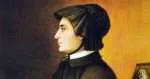
A widowed mother of five, Elizabeth Ann Seton entered the Catholic Church after encountering the faith of friends in Italy. In Maryland she founded the Sisters of Charity of St. Joseph’s and opened a school for girls. Read full reflection >>>
Roman Martyrology for January 4
Saints Hermes and Caius, martyrs
Saint Hermes and Saint Caius are venerated as martyrs in the region of ancient Moesia, corresponding to areas between present-day Romania and Bulgaria. According to the Martyrology, Hermes suffered martyrdom at Arcer, while Caius was put to death at Vidin. Their commemoration preserves the memory of early Christian witness in a frontier region of the Roman Empire, where the faith spread amid instability and persecution. Though details of their lives and sufferings are not preserved, their inclusion in the Church’s liturgical memory testifies to their fidelity unto death.
Roman Martyrology (Italian), January 4, no. 1
Saint Grégoire, bishop of Langres
Gregory lived for many years as a civil official and count in the region of Autun, exercising secular authority before embracing ecclesiastical service. Later in life, he was ordained bishop of Langres, bringing his experience of governance to the pastoral care of the Church. Gregory governed his diocese with prudence and dedication, and his memory endured as that of a bishop who faithfully served both God and his people.
Roman Martyrology (Italian), January 4, no. 2
Saint Ferréol, bishop of Uzès
Ferréol served as bishop of Uzès in southern Gaul and is remembered for his commitment to monastic discipline, having written a rule to guide monks in the religious life. Out of envy, he was unjustly sent into exile, where he remained for three years. During this time, his holiness and integrity became evident, leading to his eventual restoration. He returned joyfully to his diocese, strengthened in virtue, and resumed his pastoral ministry until his death.
Roman Martyrology (Italian), January 4, no. 3
Saint Rigomer, bishop of Meaux
Saint Rigomer is honored as bishop of Meaux in Neustria. His cult reflects the early medieval Church’s reverence for episcopal shepherds who maintained the faith and order of their communities during a formative period of ecclesial history. Biographical details beyond his episcopal office are limited.
Roman Martyrology (Italian), January 4, no. 4
Saint Rigobert, bishop of Reims
Rigobert served as bishop of Reims and became known for his integrity and fidelity to ecclesiastical law. During political turmoil, he was unlawfully removed from his episcopal see by Charles Martel, leader of the Franks. Rather than resist with violence or ambition, Rigobert accepted his displacement with humility, living quietly for the remainder of his life.
Roman Martyrology (Italian), January 4, no. 5
Saint Pharaïldis, widow
Pharaïldis is commemorated at Bruay-sur-l’Escaut, near Valenciennes, and was long venerated in Ghent. The Martyrology identifies her as a widow. It relates as tradition that she endured a violent marriage and subsequently devoted herself to prayer and austerity. The surviving narratives do not establish a detailed chronology of her life.
Roman Martyrology (Italian), January 4, no. 6
Saint Angela da Foligno, widow, Franciscan tertiary
Angela of Foligno undertook a life of penance and joined the Franciscan Third Order. After the deaths of her husband and children, she gave her possessions to the poor. Her confessor recorded her account of prayer, conversion, and union with Christ. Her Book went on to guide readers far beyond her native Umbria.
Vatican News · Roman Martyrology (Italian), January 4, no. 7
Blessed Cristiana da Santa Croce Menabuoi, virgin
Cristiana lived in Tuscany and dedicated her life to God in virginity and prayer. She founded a monastery at Santa Croce in Val d’Arno, placing it under the Rule of Saint Augustine. Her life was marked by devotion, asceticism, and the establishment of stable religious life for women. Her local cult was later confirmed by beatification.
Roman Martyrology (Italian), January 4, no. 8
Blessed Thomas Plumtree, martyr of England
Thomas Plumtree was an English priest who remained faithful to the Catholic Church during the reign of Queen Elizabeth I. Arrested and condemned for his priesthood and loyalty to Rome, he was sentenced to death. At the gallows, he publicly professed that he preferred death to abandoning the Catholic faith. He was hanged at Durham and later honored among the English martyrs for his courageous witness.
Roman Martyrology (Italian), January 4, no. 9
Saint Elizabeth Ann Bayley Seton, widow, founder of the Sisters of Charity
Elizabeth Ann Seton entered the Catholic Church after the death of her husband. In Maryland she founded the Sisters of Charity of St. Joseph’s and opened a school for girls. Read full reflection >>>
Vatican News · Roman Martyrology (Italian), January 4, no. 10
Saint Manuel González y García, bishop of Palencia and founder of the Eucharistic Missionaries of Nazareth
Manuel González y García served as bishop in Spain and became widely known as the “Bishop of the Abandoned Tabernacle” because of his deep Eucharistic devotion. As a pastor, he promoted frequent adoration of the Blessed Sacrament and founded the Congregation of the Eucharistic Missionary Sisters of Nazareth to foster Eucharistic reverence and evangelization. His episcopal ministry combined pastoral charity with intense devotion to Christ present in the Eucharist. Manuel González y García was ordained to the priesthood in 1901.
Dicastery for the Causes of Saints · Roman Martyrology (Italian), January 4, no. 11